
Finding Middlesex County Residents
No single register lists every person living in Middlesex County. Records split by purpose. A current-address question goes one place. An ownership, court, family-history, or estate question goes another. With 25 municipalities in the county, the custodian of the record depends on the town. A file for a New Brunswick address may live at the city office. The deed for that same address runs through the County Clerk. A mailing label and the legal municipality sometimes disagree. The county municipality directory is the sensible place to begin.
Careful notes make any Middlesex County residents directory search hold up. Write down the exact spelling for each result. Add the municipality, the address form, and the date. An owner is not always the occupant. A voter roll entry is not a household census. A directory line is a dated observation rather than a deed. Holding onto those distinctions keeps a same-name mix-up out of your work.
- Confirm the legal municipality and complete street address, then preserve the postal city and ZIP separately.
- Use the county-linked assessment search for a parcel, block, lot, and owner-of-record clue.
- Check the County Clerk index for a recorded deed, lien, release, or other party record tied to that parcel.
- Use the voter, court, Surrogate, or vital-record route only for the specific question each record can answer.
- For an older household, compare Rutgers directory volumes, census schedules, newspapers, and an original record or repository finding aid.
Middlesex County Resident Records Offices
Resident records in Middlesex County sit with different offices, each with its own job. The Registry Division ties names to recorded land documents. The Tax Board supervises the assessment structure that municipal assessors work within. The Board of Elections keeps registration records and forms. Each office answers a different question. So note the office name next to every result, just as you note the person's name.
To trace a street house by house, use the address workflow. The Middlesex County By Street directory is the tool. To pin down one person, set independently dated records side by side. No single office serves as a complete residents directory for the county.
County Clerk, Registry Division
County Administration Building, 4th Floor
75 Bayard Street, New Brunswick, NJ 08901
732-745-3151
County Board of Taxation
County Administration Building, 4th Floor
75 Bayard Street, New Brunswick, NJ 08901
732-745-3350
Middlesex Board of Elections
26 Kennedy Boulevard, Suite B
East Brunswick, NJ 08816
732-745-3471
Note: The County Clerk, Tax Board, and Board of Elections each hold different record types, so a no-match at one office settles nothing about the others.
Middlesex County Property Directory Clues
Start with the county-linked assessment gateway whenever a Middlesex County residents directory search begins from an address or an owner name. It takes some setup. You must pick the database, county, district, search format, output format, and results per page before the criteria area becomes usable. The criteria themselves are Location, Owner Name, Block, Lot, and Qualifier. Districts 1201 through 1225 map to the county's municipalities.
What comes back is a tax record. It can carry the situs, owner name, mailing address, municipal district, block, lot, qualifier, property class, assessments, and sale information. A situs is simply where the parcel sits. A tax mailing address is where notices go. Neither field alone proves anyone lives there now, so record both exactly, along with the search date and district.
| Visible assessment field | Search use | What to keep with a result |
|---|---|---|
| Select County and District | Routes the query to the correct municipal assessment file | Municipality and district number |
| Location | Finds a street or property location | Normalized address and returned situs |
| Owner Name | Finds owner-of-record candidates | Exact spelling and matching parcels |
| Block, Lot, Qualifier | Bridges assessment, map, and deed research | All three parcel identifiers where shown |
For a visual layer on a property lookup, the Middlesex County GIS Division publishes parcel maps with lot lines and neighboring parcels. Treat the map as a navigation aid. The recorded legal description still governs, along with whichever municipal or county office holds the official record.
Middlesex County Deed Index Trails
For deed research in the residents directory, the County Clerk's BrowserView index links recorded parties to a transaction. It also ties in the legal description. Search options run wide. You can query by document type, town, consideration amount, date range, party name, instrument number, book and page, lot and block, map number, district, parcel ID, or legal-description text. Try party names in the index's stated Last-Name First-Name format. Spelling variants matter too, since older entries often stray from modern spellings.
Online reach is not the same as record existence. The public notice covers deeds from 1929 forward. It covers mortgages from 1950. Other documents date from 1958. A 2022 county expansion pushed digitized deeds back to 1923. Earlier deed books survive in the Middlesex County record trail. The Registry search room, State Archives microfilm, Rutgers collections, and FamilySearch references hold them. The County Clerk traces deed records to 1683. The oldest material may lack a full electronic index. So the paper trail still matters for past residents of Middlesex County.
- Index
- A finding tool that points to a record. It is not always the record image itself.
- Parcel
- A mapped piece of land identified locally by such fields as block, lot, and qualifier.
- Legal description
- The land description in a recorded instrument, often more stable than a street address.
- Criss-cross directory
- A reverse directory arranged by address rather than by surname, when a volume includes one.
Business filings open a separate door. The New Jersey business-record guide explains how to request them. A dated affiliation lead can help, but BrowserView stays the County Clerk's recorded-land index.
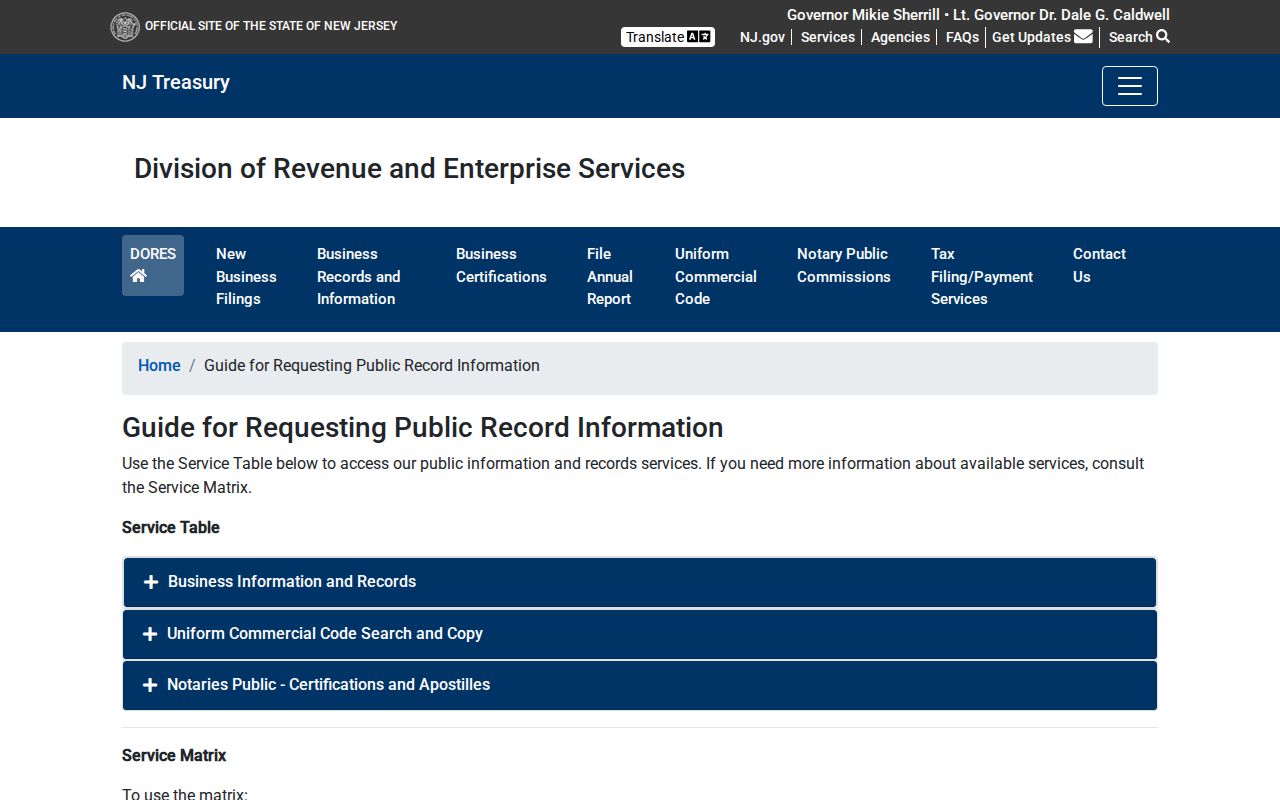
Keep the two trails separate. A state entity record may list a registered agent or officer. That business address is not a person's residence, so treat it as an affiliation clue rather than a home record.
Current Middlesex County Resident Sources
No single Middlesex County residents directory exists as one searchable roster. Instead, a current resident lookup draws on narrow public systems that each answer one question. Property rolls describe parcels and owners. Deed indexes recorded with the county recorder track transfers. Voter rolls, court files, and licensing records each add their own slice. Business filings add another slice. The table below matches every source to the inference its record rules can safely support.
| Middlesex source | What it can confirm | Custodian | Access route |
|---|---|---|---|
| Assessment record | Owner of record, parcel, situs, and possible mailing address | Municipal assessor and County Tax Board | County-linked search or local office |
| Recorded land document | Grantor, grantee, dates, consideration, and legal description | County Clerk Registry | BrowserView, search room, or written copy request |
| Voter status or lawful public field | Registration information subject to election law | Board of Elections and state system | Status portal or custodian request |
| Court or estate record | Party, docket, filing, proceeding, or estate information | NJ Courts or Middlesex Surrogate | Public index, clerk, request form, or appointment |
| License or entity record | Credential or business affiliation at the displayed date | New Jersey state agencies | Official verification or business-record route |
Data brokers stitch profiles together fast, and that speed costs you. Their records can go stale or blend two people who share a name. They can also drop the date and the custodian behind an entry. Official Middlesex County sources move slower. They reward the wait, though. Each entry reflects what a records office actually recorded, and any error can be fixed through the agency that keeps the file.
Middlesex County Resident Court Routes
NJ Courts Find a Case hub splits its lookups by category. Middlesex County researchers can choose from several routes. Options include Civil and Foreclosure, Criminal, Criminal Judgments, Judgment Liens, Tax Court, or municipal-case routes. Each route works a little differently. A party-name search may ask whether the party is an individual or a business. It then asks for a last name, first name, and an optional middle initial. Docket searches instead rely on county, docket type, number, and year. A result can surface a party and the filing date. It may also list the case type, an attorney, or a disposition. Keep perspective, though. A filing is not proof of fault, and it is not a current address.
Some material never appears online. Older paper files, sealed matters, juvenile material, and discovery stay offline. They typically require the courthouse clerk or the Judiciary Records Request Form CN 10200. That form lets you choose pick-up, mail, on-site inspection, fax, or email delivery. Court Rule 1:38 governs public access and its exceptions. When a case record matters, preserve the docket. Also keep the party role, the date, and the disposition. A headline or a search snippet will not hold up the way those details will.
The official court hub below lays out distinct case-search routes. Each one answers a Middlesex County question.
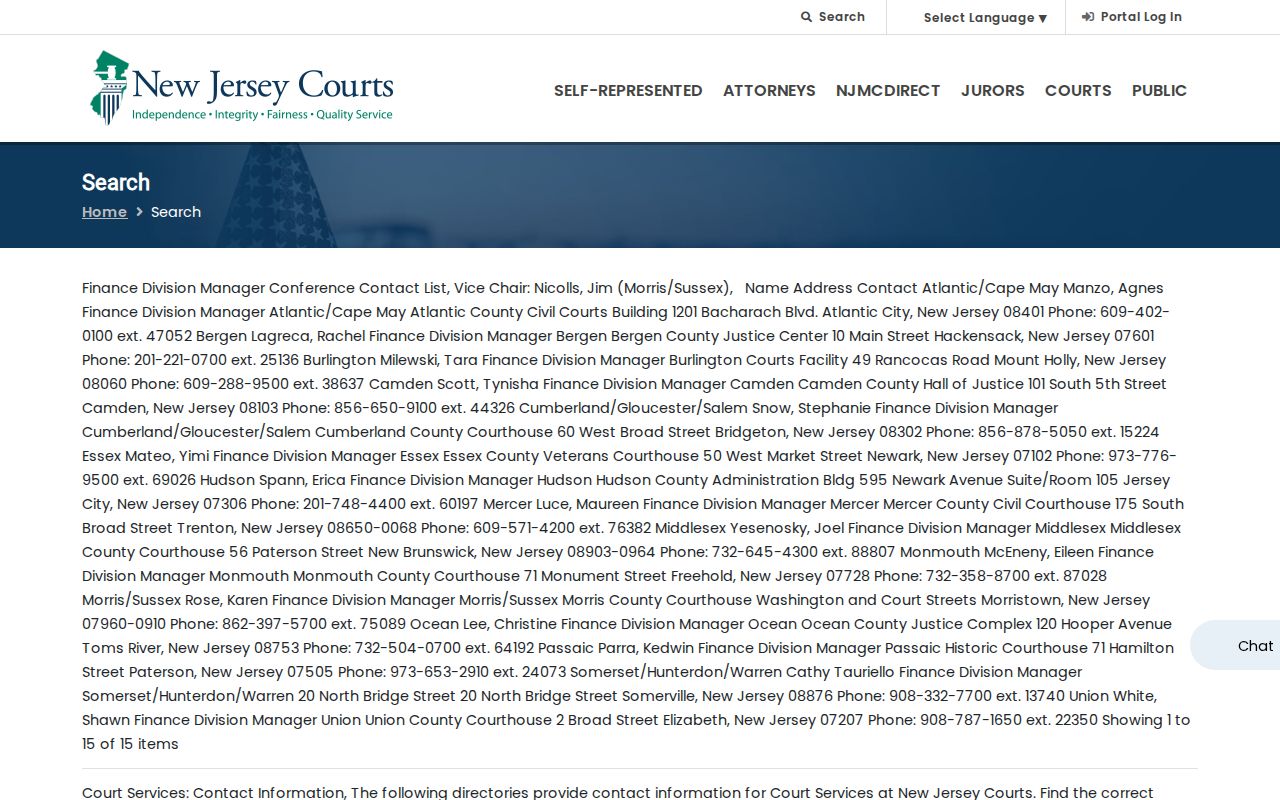
The menu helps you pick the correct court category. It does not replace reading the individual docket, or requesting a withheld public record through the Judiciary process itself.
Middlesex County Resident Voter Records
The state Voter Information Portal offers a live registration status and polling-location route. Middlesex County’s Board of Elections maintains the registration records and the voter forms. The public status interface is narrower than a full voter-file request, and its on-screen fields are limited to what the portal displays. Turn to the Board for corrections, for a specific records request, or for an explanation of the current disclosure rules.
State law shields signatures, Social Security numbers, driver-license and non-driver identification numbers, and certain protected addresses. Voter rolls also cannot prove everyone at an address. A registration may be inactive, brand new, protected, or absent for lawful reasons. Ballot choices stay private. For an historical election question, request records by municipality, ward, election, and year instead of asking for a broad personal profile.
The official status portal is pictured here as a starting point for a narrow, date-sensitive voter question in Middlesex County.
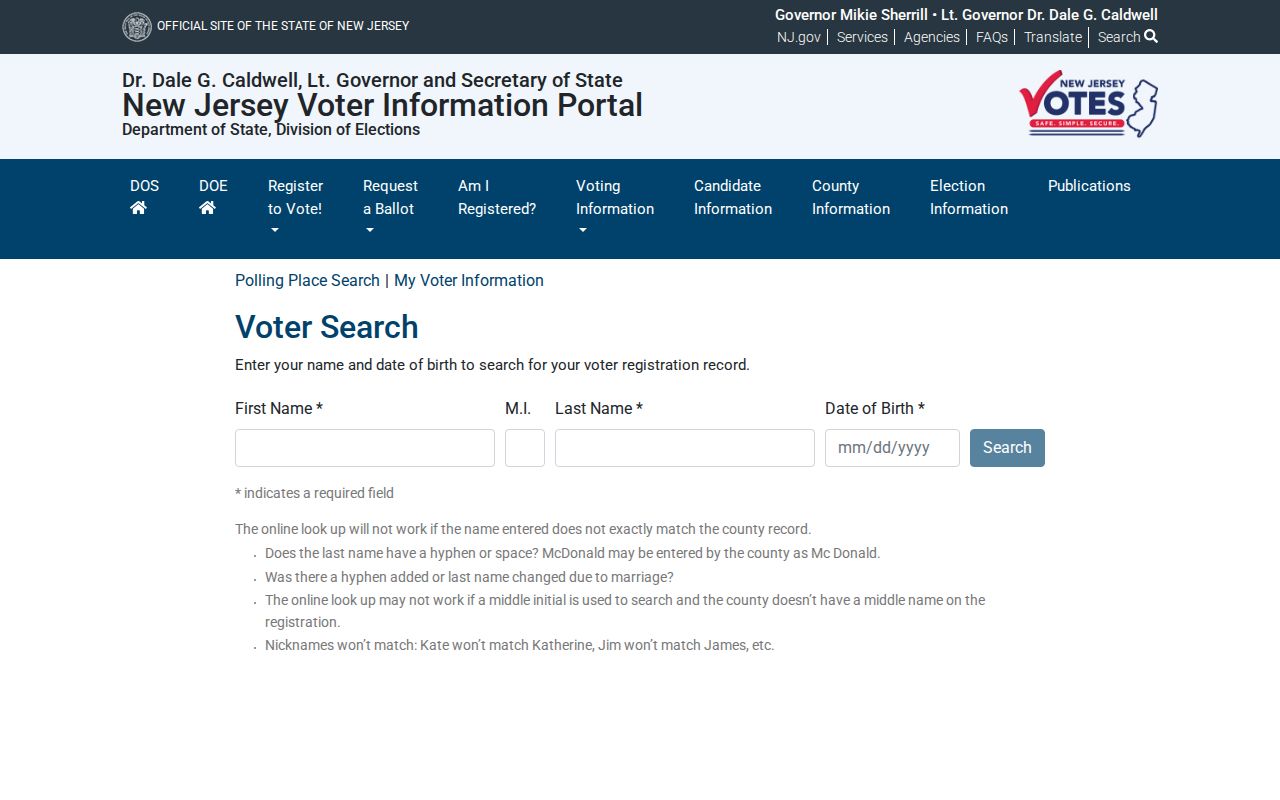
The portal handles current status checks. The county’s multilingual registration and voter forms sit on the Board’s official forms route for anyone who needs to update a record. Note: A protected or inactive voter record signals privacy or maintenance, not that a person is absent from Middlesex County.
Middlesex County Resident Vital and Estate Records
Vital and estate records often anchor family history. They may answer an heir question or document a life event. For an event in Middlesex County, the local registrar in the municipality where it occurred can issue local copies. The New Jersey Office of Vital Statistics and Registry serves as the statewide route. New Jersey treats births within 80 years, marriages within 50 years, and deaths within 40 years as non-genealogical current records. All domestic partnerships and civil unions fall in that same category. Eligibility, identity proof, and relationship rules govern certified copies.
The Middlesex County Surrogate handles probate, wills, estates, guardianships, and related records. Its records department sits at 75 Bayard Street and accepts appointments or mail research. The county posts a $10 estate search fee and $3 per page for copies. For older vital work, the State Archives may beat a current-copy request. An eligible genealogy application, newspapers, cemeteries, and repository collections can also help. The New Jersey vital-record ordering page lays out the required application, identity, fee, and relationship checklist.
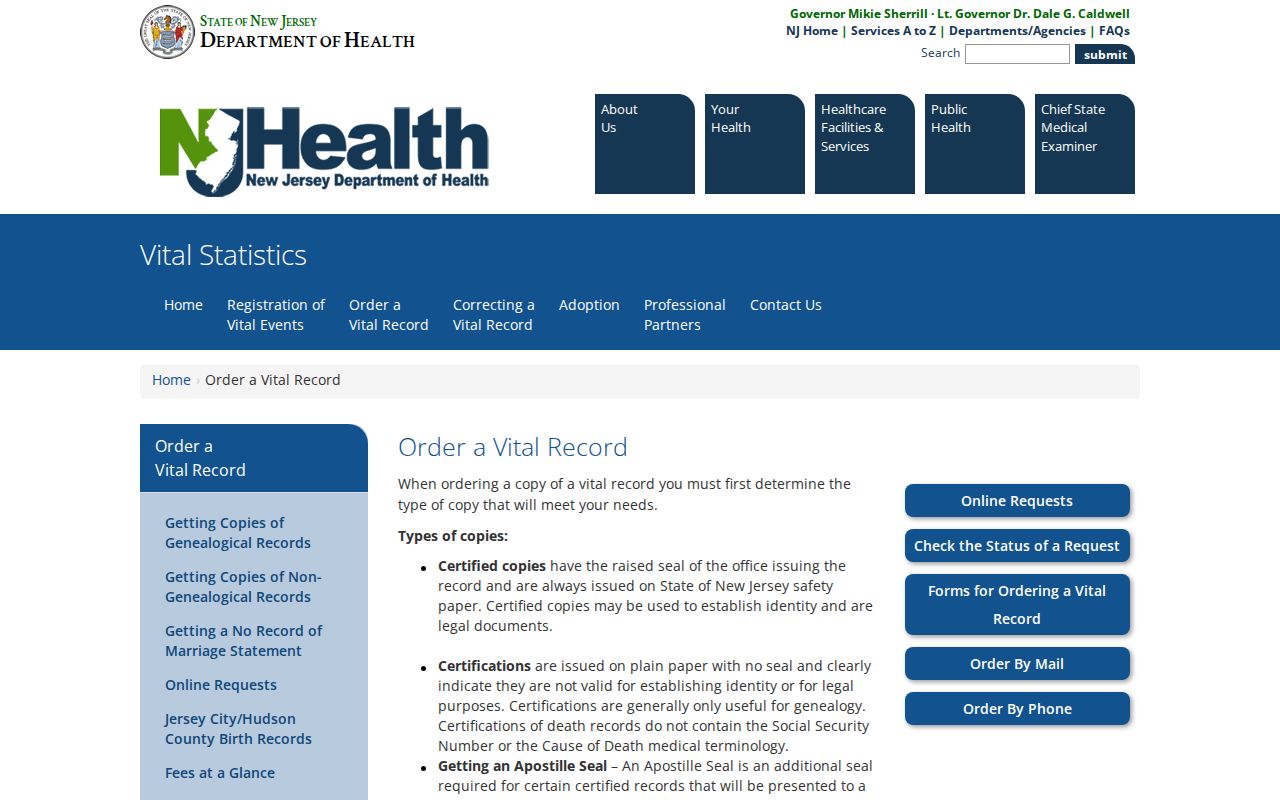
That checklist shows why a name alone cannot carry a current certified record request. It also separates a legal certified copy from a mere informational certification.
Middlesex County Resident Affiliation Records
A business filing can supply a dated affiliation lead. A professional credential or an unclaimed-property result can too. The New Jersey Division of Revenue and Enterprise Services covers entity status, registered agent and address, and officers or managers. It also covers annual reports and UCC services. The County Clerk keeps trade-name records as well. Those documents help separate a storefront from a private residence. They also separate a legal entity or a recorded proprietor from a private home.
New Jersey’s MyLicense verification system searches a person or business. Filters include profession, license type, and license status. First or middle name, last name, license number, and city narrow a search further. It runs in real time and gives no telephone numbers for individual licensees. Record the board, the credential, the result date, and the exact name as one bundle. A credential proves a licensing record on display. It is not a current home address or an identity by itself. The official license-search interface shows the fields used to narrow a verification.
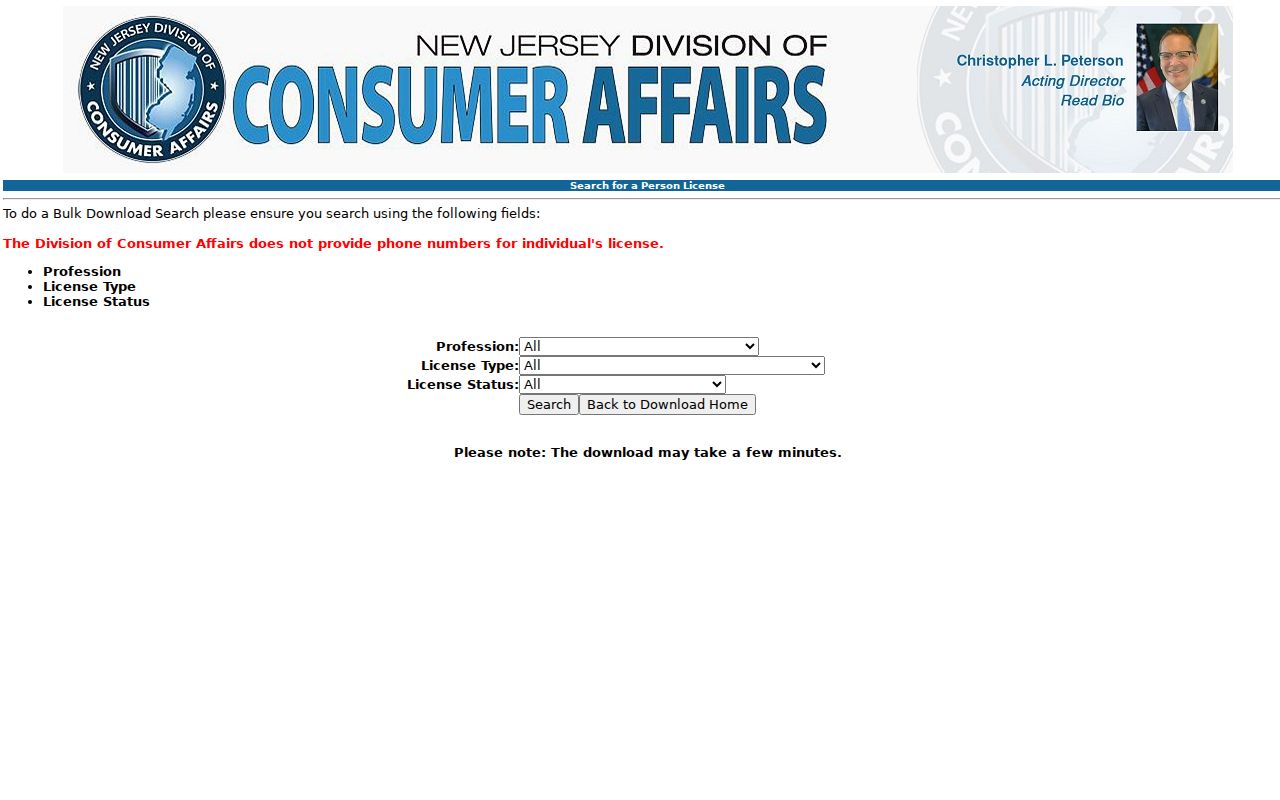
Treat license type and city as confirmation details. Then verify a same-name result against another independent record whenever the question calls for a reliable match.
Historical Middlesex County Resident Directories
Old directories for Middlesex County lead straight to New Brunswick. Rutgers University Libraries reports roughly 800 New Jersey city-directory volumes. New Brunswick coverage stands out from 1855 onward. The New Jersey Room keeps city directories in closed stacks. Request a volume by call slip. The reference desk holds an unpublished finding aid. County directories sit in open stacks. An old volume that never appears online can still be waiting in the library.
A directory entry can carry a surname, given name, spouse or relationship, occupation, home address, residence notation, business address, or a reverse street section. Check the abbreviation key before expanding any shorthand. Shorthand expands badly when guessed. A solid household trail pairs two or more directory editions with a census year, obituary, newspaper image, deed, or probate record. For collection details and the way entries read, use the Middlesex County City Directories.
Note: A historical directory is a dated snapshot. A listed address needs a date and an independent source before it supports a family-history conclusion.
Middlesex County Newspaper and Cemetery Trails
Newspapers carry the everyday record of a county. The digitized Middlesex newspaper portal supports searches by title, year, and page. Match modes include exact phrase, any words, and exclusions. Holdings span Middlesex Mirror from 1951 to 1968. Middlesex Chronicle runs from 1964 to 1993. The Chronicle follows from 1994 to 2007. Try initials, street names, neighboring towns, funeral homes, and varied spellings, and always open the page image because OCR misreads surnames and street addresses.
A Genealogical Society of New Jersey locator adds another layer. It maps more than 280 burial places with nine maps, historical photographs, alternate cemetery names, and a full-name index. An obituary or cemetery entry ties a dated address to relatives or a funeral home. Treat it as a lead, and confirm through a marker, the original newspaper page, a vital record, or a Surrogate file.
Middlesex County Resident Privacy Boundaries
Access to records in Middlesex County depends on the custodian and the protections around a person. State law shapes what any records office can release. The New Jersey Address Confidentiality Program can give qualifying survivors a substitute address. Daniel's Law covers redaction for protected people and households. Voter rules shield specified addresses and identifiers too. Court, adoption, juvenile, expunged, and restricted materials carry their own limits.
For a protected-address question, use the Address Confidentiality Program or the Office of Information Privacy. Never ask a clerk to reveal a hidden location. Errors go to the source custodian. The assessor or Tax Board handles assessment records; the County Clerk, indexes; the Board of Elections or municipal clerk, voter information; the court clerk, dockets; and the registrar or Department of Health, vital records.
Middlesex County Property Alert Checks
In 2022, Middlesex County announced a free Property Alert service. It alerts a subscriber after a match. Matches can follow a legal description, municipality, block and lot, or party name. The alert is a notice, not prevention. Open the document anyway. Compare the legal description. Contact the County Clerk when a recorded item looks wrong.
The county also posted scam warnings about jury duty and warrant payments in 2025 and 2026. No agency demands a Social Security number by phone. A public-record search can hand a scammer a name or property fact. So navigate to the known county Property Alert notice or another official county and state page instead of trusting an unsolicited call.
A simple source log helps. Keep the URL, date, terms, municipality, and identifier. That record-by-record discipline keeps a residents directory search useful for family, property, heir, and civic questions without turning a dated public clue into an unsupported claim about a person.