
Middlesex County Previous Residents by Era
Previous residents of a Middlesex County address emerge from sources with different time windows. A recorded deed identifies a transfer and legal description, not necessarily the person who moved in. A directory is a dated canvass. Census schedules are household snapshots released under a federal timetable. Municipal permit material can date work at an address without naming every occupant. Start with the era in question, then select the source that was actually maintained at that time.
| Source | Years it covers | Where held | What it can show |
|---|---|---|---|
| County deed index and search | 1929 to present stated; deeds digitized to 1923 | County Clerk BrowserView and public search room | Ownership transfer, legal description, grantor, and grantee |
| County deed books | On file from 1683; web coverage is later | County Clerk, State Archives microfilm to 1900, and FamilySearch references | Title chain, lot descriptions, and adjoining owners |
| New Brunswick city directories | 1855 onward, with exact annual run to confirm | Rutgers New Jersey Room closed stacks | Occupant, occupation, household clues, and address |
| Federal census | 1850 through 1950 released | National Archives, Census, and authorized library databases | Household, age, birthplace, and neighboring entries |
| New Jersey state census | 1855 through 1915 survive; local availability varies | State Archives microfilm and selected FamilySearch or Ancestry references | Residents between federal census decades and ward or township context |
| County newspapers | Titles vary, including 1951 through 2007 runs | Middlesex digitized newspaper portal | Obituaries, notices, civic events, and address references |
| Building and certificate files | Municipality-specific; cutoff not located | Municipal construction or code office | Construction, alteration, demolition, and certificate dates |
For a modern transfer, begin with the land-record and assessment trail. For a nineteenth- or early twentieth-century household, start with the directory and census sequence, then use deed books or archives to connect the property. The county’s 25 municipalities matter at every stage because a municipal office, postal label, and historical collection can differ within Middlesex County.
Middlesex County Deed Search Window
The Middlesex County Clerk Registry is the central online route for past residents research when an ownership transfer is the first dated anchor. The official notice lists deeds from 1929 forward, mortgages from 1950, and other documents from 1958. A 2022 county digitization announcement says deeds were converted back to 1923. Treat 1923 as a practical digitized-deed cutoff and 1929 as the explicit landing-page notice, then verify an older deed with the office.
Land records, including deeds and mortgages, have been on file since 1683. That does not mean every early record has a name-searchable online image. Once the browser route stops, use the Registry public search room and county paper index or deed book. State Archives microfilm reaches county deed material to 1900, Rutgers holds relevant call-slip collections, and FamilySearch has digitization references. A written County Clerk request is another route when the document is identifiable.
BrowserView accepts town, document type, date, party name, lot and block, parcel, map, instrument number, book and page, and legal-description searches. It uses a reCAPTCHA, and document-type options load dynamically. If a text-only attempt does not expose a result, use the public browser or search room rather than treating that limitation as proof of no record.
Note: Record the coverage notice, selected municipality, search terms, and access date with every deed-index result.
Trace Middlesex County Previous Owners
The backward deed chain starts with property identifiers, not a surname alone. Use the county-linked assessment search to collect the current situs, municipality or district, block, lot, qualifier, owner of record, and displayed mailing field. Then compare the parcel in county GIS. A street address can be missing or inconsistent in an old deed, while the legal description, recorded map, block and lot, subdivision, or adjoining-owner language can keep the same property connected across time.
- Normalize the current address with USPS and the municipal assessment system. Keep the exact spelling, unit, municipality, postal city, ZIP, block, lot, qualifier, legal description, and parcel location.
- Search the current owner as grantee in the County Clerk index. Save the purchase deed’s recording date, deed date, book and page or instrument number, grantor, consideration, and property identifiers.
- Read the legal description and the Recital or Being Clause. Use its earlier seller and deed book or page reference to identify the prior transaction.
- Search that seller as a prior grantee, adding town and document type when a name produces unrelated filings. Check whether the person owned more than one parcel.
- When the online trail reaches the early cutoff, move to the Registry search room, paper books, State Archives microfilm, Rutgers, FamilySearch references, or a written request.
- Grantor and grantee
- The grantor transfers an interest in a deed; the grantee receives it. Their names identify a transaction, not automatic occupancy.
- Chain of title
- The sequence of recorded transfers used to follow a property backward or forward in time.
- Legal description
- The recorded property wording, such as block and lot, map reference, subdivision, or metes and bounds. It is often steadier than an old street number.
- Instrument number
- A unique number for a recorded document that can be more precise than a party-name result.
Middlesex County Being Clause Bridge
Useful County Clerk practice. The County Clerk’s FAQ directs researchers to a deed’s Recital or Being Clause because it can name the grantor who sold to the current owner and give the prior deed book and page. That reference is the practical bridge between a known transfer and an older one. It is more reliable than trying to force a modern street name into an earlier index where the address may never have been written the same way.
Deed images can include grantor and grantee, consideration, recording date, book and page or instrument number, legal description, municipality, block and lot, notary acknowledgment, and attachments. The Clerk’s browser instructions say V and B are verified statuses, while other statuses are not verified; R and C mark replaced and correction records. Check the actual image and its redactions. A deed is not a survey, and a legal description can require a surveyor to locate a boundary.
Middlesex County Past Household Pairing
Ownership is only one layer of a former-address search. Rutgers reports that New Brunswick city directories are especially complete from 1855 onward, though they remain closed-stack material and the exact annual run should be checked at the reference desk. A reverse or criss-cross section, when available, starts with the address. The alphabetical entry then adds a dated household lead. The collections themselves are covered in the Middlesex County city directories; pair one edition with census, deed, and newspaper evidence to keep the focus on one address over time.
- Choose a directory edition close to the deed date and record the address exactly as printed, including number, street form, municipality, and any abbreviation.
- Read the volume’s own abbreviation key before interpreting residence, widow, boarding, rear, or corner notations.
- Pair the edition with the nearest released federal census, then use ward, district, street, and neighboring entries to test the match.
- Use New Jersey state-census microfilm for 1855 through 1915 where the municipality and year are available. GSNJ notes Middlesex material for 1875 and later with selected references.
- Confirm the address through another dated source, such as a deed, newspaper image, cemetery record, probate filing, or city-directory edition.
Federal schedules are generally released after 72 years, making 1950 the latest full schedule available in 2026. A census household, a directory household, and a legal owner are different units. Surname spellings can vary, immigrants may use anglicized forms, and later sources can index women under married names. A strong identity match repeats the address with other anchors instead of relying on one entry.
Middlesex County Previous Address Changes
Address-history caution. A missing modern address does not prove that the earlier resident trail ended. Middlesex County history shows why. The 1855 New Brunswick directory and a county historic-house report use different Albany Street numbers for a related historic location, with a Water Street rear address also in the record. Numbering, frontage, parcels, entrances, and source conventions can explain an apparent conflict.
Keep the original source wording alongside a normalized working form. Test Road and Rd, Route and Rt, directional prefixes, apartment numbers, old names, cross streets, landmarks, and adjoining owners. Postal city and legal municipality can also diverge: Fords or Iselin may be in Woodbridge, Dayton or Kendall Park may be in South Brunswick, and Parlin may be in Sayreville. Block and lot or a legal description are better cross-year anchors than ZIP alone.
For physical context, a Perth Amboy Sanborn map sequence covers 1914 through May 1950 in 74 sheets. It can help date a footprint, materials, use, and nearby structures, but it does not name occupants by itself. Compare the map with a dated directory, deed, or newspaper image before making an address-history conclusion.
Middlesex County Previous Residents Archives
The Middlesex County History Hub catalog is a route to more than 100,000 catalogued artifacts, photographs, documents, and related resources. The Kler Reading Room can be contacted for research use, with county information directing historic-house, preservation, and genealogy inquiries to 732-745-3030. No formal county house-history guide or guaranteed research service was verified, so contact the office before expecting a specific lookup.
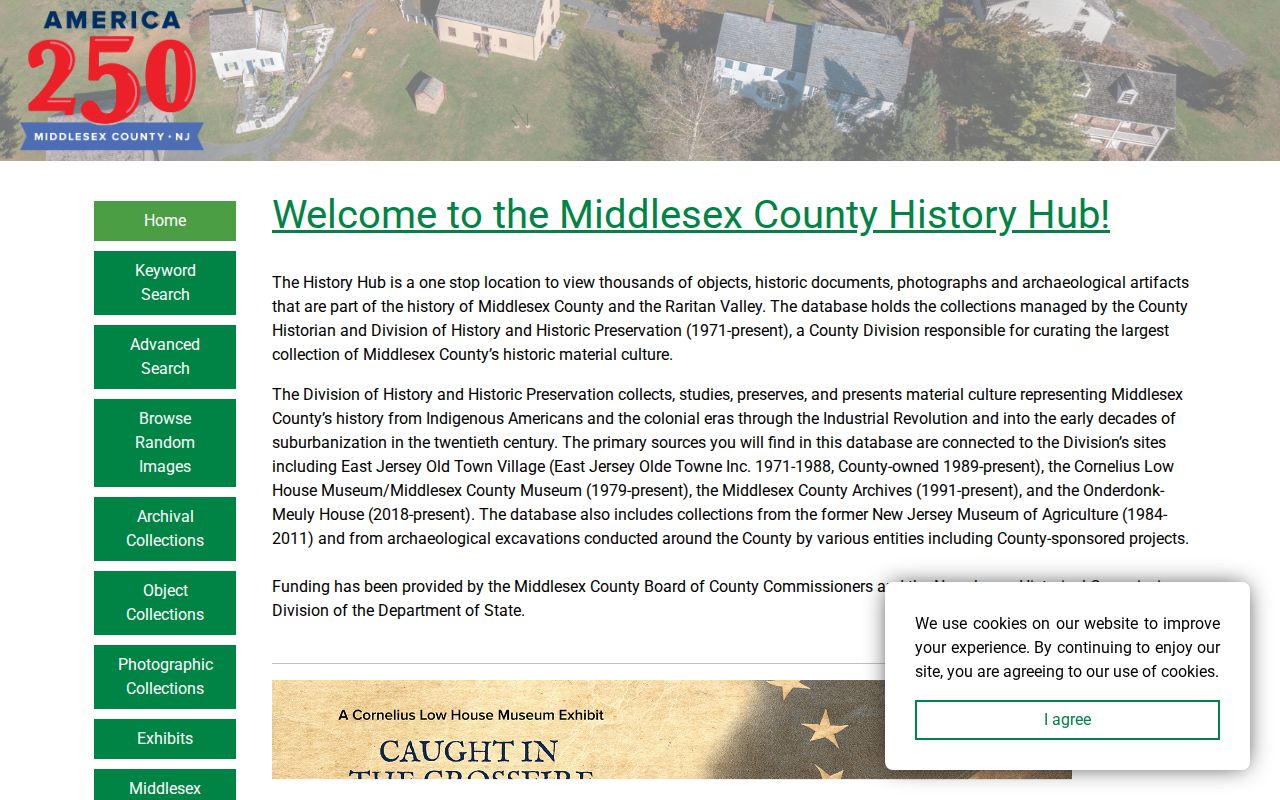
The catalog is a starting point for photographs, maps, vertical files, artifacts, and local-history leads by street, business, organization, municipality, or name. It does not turn every historic item into a current address record. Rutgers Special Collections, local historical societies, and the History Hub can supply distinct types of evidence, so describe the precise item and date found at each stop.
Middlesex County Directory Access Paths
Rutgers is the strongest located source for the local printed-directory shelf: its genealogy guide says New Jersey city directories total about 800 volumes and are especially complete for New Brunswick from 1855 onward. City directories are in closed stacks, where a call slip and unpublished finding aid are used at the New Jersey Room reference desk. County directories may be on open shelves. A web search that does not show a year is therefore not proof that a physical volume is absent.
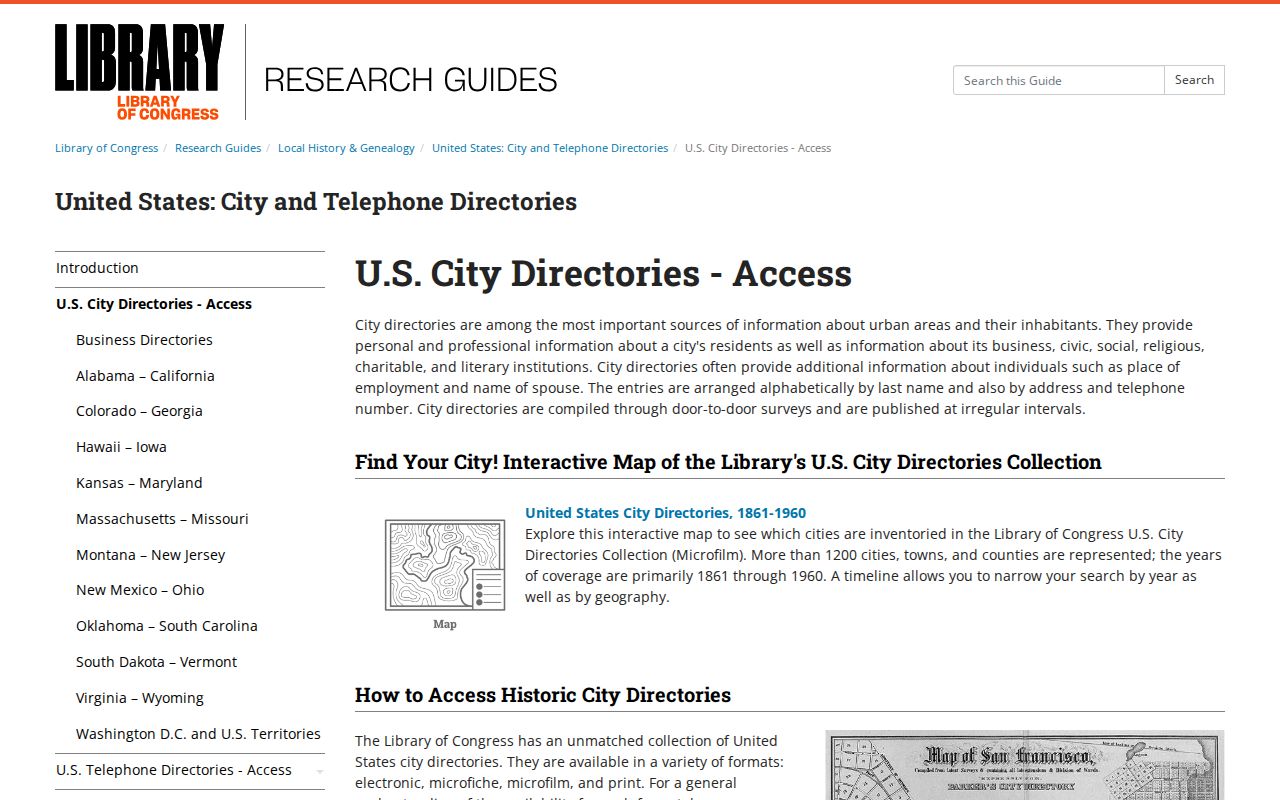
Use the Library of Congress city-directory guide as a wider fallback. It describes a U.S. collection primarily for 1861 through 1960, including supplemental New Jersey directories. The Library of Congress does not lend directories or conduct personal-name searches. Request or inspect the relevant volume rather than assuming it represents a complete Middlesex run.
Directory entries are periodic canvasses, not legal occupancy records. They can retain a person after a move or omit a new arrival. An entry becomes more useful when the address, household relationship, occupation, and neighboring household recur in two or more dated editions and line up with another record.
Middlesex County Previous Resident Endpoints
Newspapers, cemeteries, and probate can close a former-resident trail. The Middlesex digitized newspaper portal includes Middlesex Mirror from 1951 to 1968, Middlesex Chronicle from 1964 to 1993, and The Chronicle from 1994 to 2007, among other shorter runs. Its search supports Boolean terms, exact phrases, date filters, title selection, and page-image controls. Search a name with the street, town, church, funeral home, or “survived by,” then inspect the page image because OCR can misread a surname or street.
An obituary can name a spouse, children, siblings, cemetery, funeral home, or prior residence, but it may be incomplete and the address may not be current. The GSNJ cemetery locator covers more than 280 burial places and includes alternate names, maps, photographs, and a full-name index. For estate evidence, the Middlesex County Surrogate records department offers an estate search for $10 and copies for $3 per page; call before visiting because the office is by appointment.
Building permits and certificate records can establish construction, additions, conversions, demolition, or a certificate date. Request the address and a date range from the municipal construction or code custodian. Do not expect these files to establish every person who lived there.
Middlesex County Previous Residents Limits
Past residents research is most useful for family history, house history, estate and heir work, historic preservation, and personal curiosity. Treat a current portal status, dated directory entry, deed, census schedule, newspaper item, and archive catalog record as separate evidence types. Keep an address, person, date, exact wording, source image or call number, and reason for any conflict in the research notes.
New Jersey protections can limit what a custodian releases. OPRA, P.L. 2001, c.404, N.J.S.A. 47:1A-1 et seq., is a request path for identifiable county and municipal records, not a demand for a new compiled list or exempt information. Address Confidentiality Program participants, Daniel’s Law protections, and other statutory limits remain in force. Ask for segregable non-exempt portions when a specific record contains protected information.
Lawful use. Use Middlesex County historical records to understand a property or family trail, not to track, harass, or harm a living person. Do not publish protected addresses, sensitive identifiers, signatures, or unsupported claims about current occupants.