
Middlesex County Resident Lookup Records by Question
A sound name search does not begin by trying to find every fact about one person. It begins by matching the record to the question. The county-linked assessment system can identify an owner of record, a parcel, and a tax mailing address. The County Clerk can connect a named party to a recorded document and legal description. The state voter tool reports limited current registration information, while courts, vital-record custodians, the Surrogate, and state license systems each hold a different kind of dated evidence. None of these sources alone proves that a person currently lives at a particular place.
| Record | What It Can Confirm | Custodian or Route | Access Path |
|---|---|---|---|
| Assessment or parcel record | Owner of record, situs, tax mailing address, block and lot | Middlesex county tax assessment search | County-linked search; municipality handles assessment corrections |
| Recorded land document | Grantor, grantee, date, legal description, lien or transfer trail | Middlesex County Clerk Registry | Online coverage varies by document; older books use the search room or archives |
| Voter status or file | Limited registration status and public election fields | NJ Voter Information Portal | Status lookup or Board of Elections custodian request, subject to protections |
| Court case record | Party, docket, filing, case type, orders, and disposition context | NJ Courts Find a Case | Public database, courthouse terminal, clerk route, or CN 10200 request |
| Vital or estate record | Life event or estate filing, when access rules permit | Local registrar, NJ OVSR, State Archives, or Middlesex Surrogate | Eligibility, appointment, mail, or records-request route depends on the record |
If you already know an address, the assessment and recorded-document routes are the strongest first anchors. If all you have is a name, start with a precise name variant and municipality, then keep the source date beside every result. A mailing address, case entry, directory listing, or registration result is a clue with its own limits, not a substitute for a second record.
Middlesex County Resident Lookup in the NJ Courts Index
The statewide NJ Courts Find a Case hub separates civil and foreclosure cases, criminal cases and judgments, judgment liens, Tax Court cases, and municipal-court routing. Middlesex is chosen as the case county when the selected search needs a county. A party-name hit should be read as a case lead: check the party role, case type, dates, and any disposition or order before drawing a conclusion. Public case information can list filings, proceedings, attorneys, and orders, but it does not mean every document image is online.
| Search Field | How It Is Used | Important Limit |
|---|---|---|
| Case County | Select Middlesex for docket-mode searching | County selection does not replace the correct docket type |
| Docket type, number, and year | Find an existing case jacket by its identifying number | Number and year formats must match the case system |
| Individual last name, first name, and optional middle initial | Search a party name with known variants | The training guide describes exact-name matching |
| Individual or business choice | Sets the party-search category | A business-name result is not an individual identity match |
| Criminal identifiers | Depending on the search, use defendant name, SBI number, complaint, or indictment number | Restricted, sealed, juvenile, and expunged material is excluded |
| Tax Court party, docket, block, or lot | Connect a tax case to a party or parcel | Use the parcel facts to confirm the match |
The public case-jacket landing process includes a reCAPTCHA and agreement step for each search. For an older paper file, a record that is absent from the electronic jacket, or a copy that needs official handling, use the court clerk or public terminal and the Judiciary Records Request Form CN 10200. That form permits pick-up, mail, on-site inspection, fax, or email preferences and collects case, party, and record-description details. Most completed requests go through Judiciary Electronic Document Submission; Tax Court requests use the court's stated email route. Listed copy fees are 5 cents for a letter-size page and 7 cents for a legal-size page, with separate special seal or certified fees.
For context, the New Jersey Department of Corrections information page links to its statewide incarcerated-person search. Its current result fields were not captured in the research, so it is best used as a current status route rather than a general address tool.
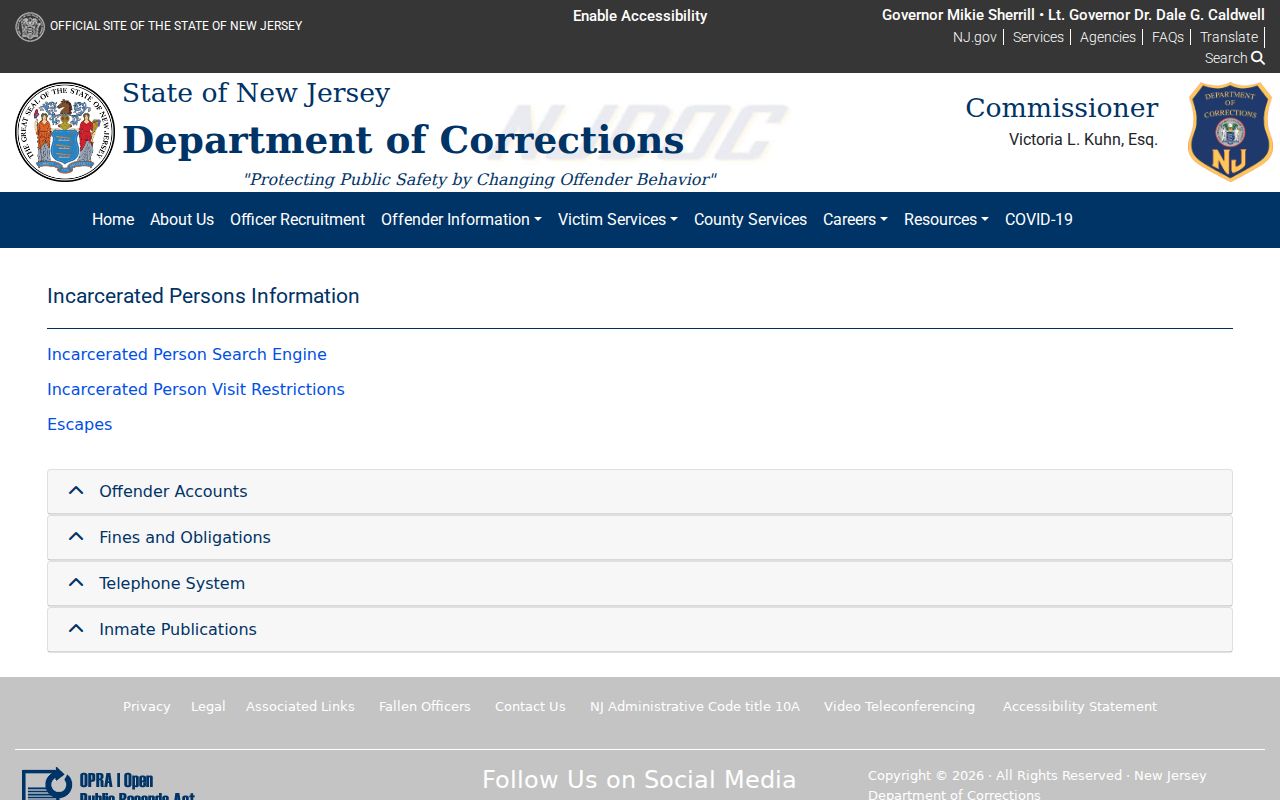
A custody-related result has a date and agency scope. It cannot establish a complete address history or settle the identity of another person with the same name.
Verify a Middlesex County Resident Lookup With Two Anchors
Use two independent anchors before deciding that records belong to the same person. Good pairings include name plus dated address, spouse, business affiliation, parcel description, or a court or vital-event date. This method is especially important in Middlesex County, where surname variations, initials, changed names, postal labels, and adjacent municipalities can create false matches. Preserve the query spelling and the municipality used in each source so another searcher can retrace the result.
- Record the exact name, known municipality, and a date range. Add initials, middle names, former names, hyphenation, and common spelling variants before searching.
- Use the assessment search or voter-status route to seek a first address or parcel clue. Treat an owner or mailing address as a lead, not proof of present presence.
- Search the County Clerk party index by the name variants, town, date, and document type. Compare the legal description, block and lot, or recorded date with the first clue.
- Use the court, estate, vital, directory, or license route only after the second anchor supports the same identity. Request a custodian copy when the underlying record matters.
- Docket
- A court's identifying number for a case, usually read with the case type, court, and year rather than as a name alone.
- Index and image
- An index points to a record. An image is the scanned document or page itself, and availability can differ by date and access rule.
- Certified copy
- An official copy issued by the responsible custodian with the certification treatment required for the particular record, not merely a printout from a search screen.
Note. Write down a no-match as a result for one portal, query, and date, not as proof that a person has never been in Middlesex County.
Middlesex County Vital Records Have Separate Routes
For a birth, death, marriage, civil union, or domestic-partnership event, the local registrar in the municipality where the event occurred can issue local copies. The New Jersey Office of Vital Statistics and Registry is the statewide route. Current non-genealogical categories are births within 80 years, marriages within 50 years, deaths within 40 years, and all civil unions or domestic partnerships. A certified copy requires identity and a qualifying relationship, authorized agency status, or a court order. An informational certification is not an identity document.
For older family-history questions, the state genealogical process and its REG-28 route are the appropriate alternatives. The State Archives describes holdings for births from 1848 through 1925 and marriages and deaths from 1848 through 1950. An application needs the event place, names, dates or search range, and supporting information the custodian requests. Incomplete applications are returned. Divorce records follow a different path: they are Superior Court records, not County Clerk records, and pre-2016 certified-decree questions go through the Superior Court Records Center direction.
Middlesex County Resident Lookup for Estate and Affiliation Clues
Estate research has a local route that a name search cannot replace. The Middlesex County Surrogate maintains probate and estate records and accepts an appointment or mail-based search. An estate search costs $10 and copies cost $3 per page under the researched schedule. Start with the decedent's name, approximate death date, and estate number if known, then compare any permissible will or administration material with a deed's legal description and an obituary. Next-of-kin references should be treated as a dated estate fact, not a current-contact list.
State business and professional sources can also provide a narrow affiliation check. The NJ Division of Revenue and Enterprise Services guide describes entity status, registered agents, officers, annual reports, formation dates, and UCC-related filings. NJ MyLicense searches profession, license type and status, name, license number, and city. A business address, agent address, or license city confirms only what that particular filing reported at that time.
An Insider Tip From Middlesex County Recorded Deeds
The County Clerk's Being Clause is often the most useful bridge from a known owner to an earlier document. It can name the earlier seller and provide a deed book and page. In the Official Records search, work from the document's party, town, date, and legal description instead of assuming a name match is enough. The public landing page gives one online coverage notice for deeds from 1929 forward, while the county's digitization announcement says deeds were expanded back to 1923. For earlier records, use the public search room, State Archives, Rutgers, FamilySearch, or a written Registry request.
That history helps a name search stay honest about gaps. A digitized deed trail can verify a recorded transfer, but it does not identify every person connected with an address. For the modern address-focused process, the Middlesex County By Street guide follows parcels and deeds along a named street without turning one owner's record into a household list.
Middlesex County Registry Results Need Context
A common myth is that a property owner, a tax mailing address, a voter result, a directory entry, and a public-safety registry result all prove present occupancy. They do not. An owner may be an estate, trust, business, or family member; voter data can be protected or inactive; historic directories are snapshots; and a case party is not a finding of fault. Keep the source date and field that supports the statement. When sources conflict, preserve the conflict and ask the responsible office about its correction process.
The New Jersey State Police registry is a public-safety resource with legal-use restrictions, not a complete criminal-history database. Its address or name result must not be used to make claims about everyone at a location.
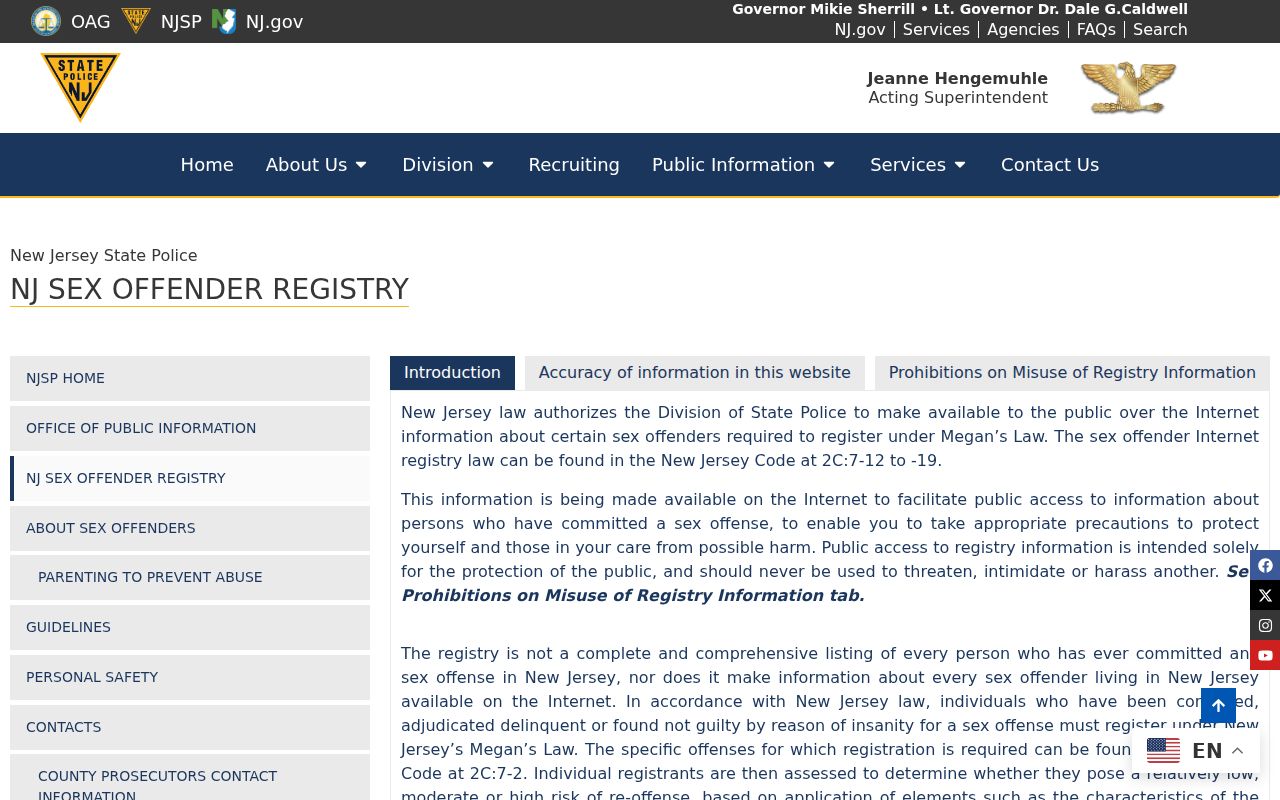
Read the registry's own notice and search rules before using it, and verify any related court question through the actual court record and disposition.
Middlesex County Resident Lookup Privacy and Corrections
New Jersey's access rules are record specific. The New Jersey Open Public Records Act, P.L. 2001, c.404, N.J.S.A. 47:1A-1 et seq., can be a request route for maintained county or municipal records, but it does not override court rules, vital-record eligibility, protected voter data, or other statutory exemptions. The Address Confidentiality Program can supply a substitute address for qualifying participants, and Daniel's Law can require suppression or redaction of covered information. Do not seek a protected address from a clerk or attempt to reconstruct it from other records.
Lawful use. Use records only for a legitimate personal, historical, civic, or estate question and display the minimum detail needed. Do not use a record to stalk, harass, intimidate, or repeatedly contact a person.
Corrections belong with the source custodian: a municipal assessor or the County Tax Board for assessment data, the County Clerk Registry for an indexed land record, the Board of Elections or municipal clerk for voter data, the court clerk for a docket issue, and NJDOH or the local registrar for a vital amendment. Do not silently change a copied index.
When a Middlesex County Resident Lookup Stops Online
An online no-match is a cue to use the next documented channel. For land records, try the Registry search room and older archive or library holdings. For a court file, use a courthouse terminal, clerk request, or CN 10200. For a historic vital event, use the State Archives catalog or a genealogical application rather than requesting a current certified copy without eligibility. For a former classmate or relative, Rutgers and municipal libraries, yearbooks, newspapers, obituaries, and archival collections can provide dated identity anchors.
OPRA is useful when a county or municipality maintains the particular non-exempt record, and a request should name the municipality, date span, identifier, and format sought. It cannot require an office to create a current resident list. When an old directory entry is the best available lead, the Middlesex County City Directories collection guide explains where the historical volumes and related records can be checked.