
Finding Middlesex County Residents
Middlesex County does not maintain one universal roll of everyone who lives here. Start by separating a current address question from an ownership, court, family-history, or estate question. The county has 25 municipalities, and the municipal custodian matters. A New Brunswick file may sit with that city office, while a deed for the same address is recorded through the County Clerk. The county municipality directory is the practical first stop when a postal label and legal municipality do not match.
A sound Middlesex County residents directory search records the exact spelling, municipality, address form, and date for each result. A property owner is not automatically an occupant. A voter record is not a household census. A directory entry is a dated observation, not a deed. Those distinctions keep a useful search from becoming a same-name mistake.
- Confirm the legal municipality and complete street address, then preserve the postal city and ZIP separately.
- Use the county-linked assessment search for a parcel, block, lot, and owner-of-record clue.
- Check the County Clerk index for a recorded deed, lien, release, or other party record tied to that parcel.
- Use the voter, court, Surrogate, or vital-record route only for the specific question each record can answer.
- For an older household, compare Rutgers directory volumes, census schedules, newspapers, and an original record or repository finding aid.
Middlesex County Resident Records Offices
Middlesex County resident records are distributed by function. The Registry Division connects names to recorded land documents. The Tax Board oversees the assessment structure used by municipal assessors. The Board of Elections handles registration records and forms. Each office answers a different question, so keeping the office name beside the result matters as much as keeping the person’s name.
For a street-by-street chain, use the address workflow on the Middlesex County By Street directory. For a person-specific match, compare independently dated records instead of treating any one office as a complete residents directory.
County Clerk, Registry Division
County Administration Building, 4th Floor
75 Bayard Street, New Brunswick, NJ 08901
732-745-3151
County Board of Taxation
County Administration Building, 4th Floor
75 Bayard Street, New Brunswick, NJ 08901
732-745-3350
Middlesex Board of Elections
26 Kennedy Boulevard, Suite B
East Brunswick, NJ 08816
732-745-3471
Note: The County Clerk, Tax Board, and Board of Elections hold different record types, so a no-match at one office does not settle another record question.
Middlesex County Property Directory Clues
The county-linked assessment gateway is the best starting point when a Middlesex County residents directory search begins with an address or owner name. It requires database, county, district, search-format, output-format, and results-per-page selections before the criteria area becomes useful. The visible criteria are Location, Owner Name, Block, Lot, and Qualifier. Districts 1201 through 1225 correspond to the county’s municipalities.
The returned assessment information is a tax record. It may provide the situs, owner name, mailing address, municipal district, block, lot, qualifier, property class, assessments, and sale information. A situs is the parcel location; a tax mailing address is where notices go. Neither field alone proves present occupancy. Record both exactly, with the search date and district.
| Visible assessment field | Search use | What to keep with a result |
|---|---|---|
| Select County and District | Routes the query to the correct municipal assessment file | Municipality and district number |
| Location | Finds a street or property location | Normalized address and returned situs |
| Owner Name | Finds owner-of-record candidates | Exact spelling and matching parcels |
| Block, Lot, Qualifier | Bridges assessment, map, and deed research | All three parcel identifiers where shown |
A parcel map from the Middlesex County GIS Division can add geometry and nearby parcels. The map is a navigation aid. The recorded legal description and the responsible municipal or county office control the underlying record.
Middlesex County Deed Index Trails
The Middlesex County Clerk’s BrowserView index is a strong resident-history source because it connects recorded parties to a transaction and a legal description. Its search options include document type, town, consideration amount, date range, party name, instrument number, book and page, lot and block, map number, district, parcel ID, and legal-description text. Party names should be tested in the index’s stated Last-Name First-Name form and with spelling variants.
Online coverage is not the same as record existence. The public notice gives deeds from 1929 forward, mortgages from 1950, and other documents from 1958. A 2022 county expansion reported deeds digitized back to 1923. Older deed books remain part of the Middlesex County record trail through the Registry search room, State Archives microfilm, Rutgers collections, and FamilySearch references. The County Clerk says deed records exist from 1683, but older material may not have the same electronic index.
- Index
- A finding tool that points to a record. It is not always the record image itself.
- Parcel
- A mapped piece of land identified locally by such fields as block, lot, and qualifier.
- Legal description
- The land description in a recorded instrument, often more stable than a street address.
- Criss-cross directory
- A reverse directory arranged by address rather than by surname, when a volume includes one.
The New Jersey business-record guide is shown below. Business filings can be a dated affiliation lead, while BrowserView remains the County Clerk’s separate recorded-land index.
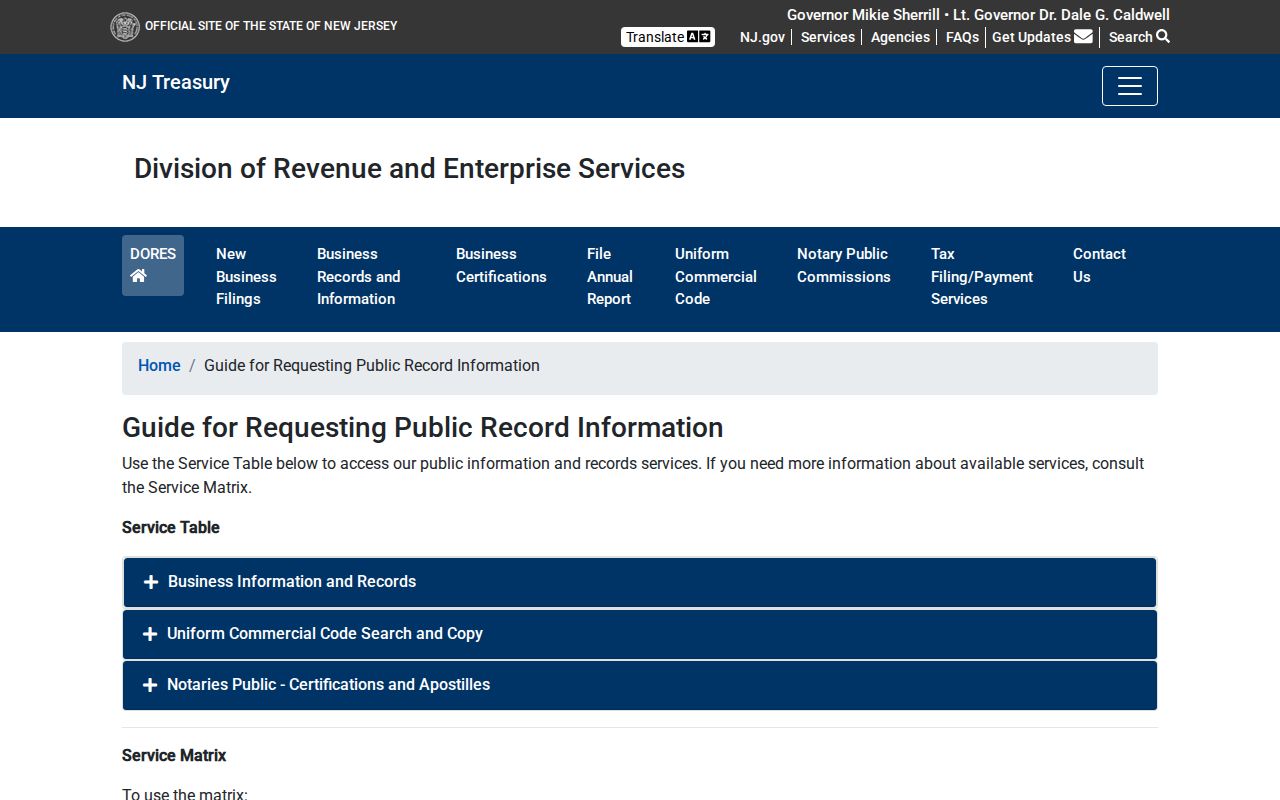
New Jersey business records are a separate affiliation trail. A state entity record can show a registered agent or officer, but that business contact must not be treated as a person’s residence.
Current Middlesex County Resident Sources
A current Middlesex County residents directory is assembled from narrow public sources, not a single searchable roster. Assessment, recorded-document, voter, court, licensing, and business systems each answer only the question within their own record rules. The table separates the source from the inference it can safely support.
| Middlesex source | What it can confirm | Custodian | Access route |
|---|---|---|---|
| Assessment record | Owner of record, parcel, situs, and possible mailing address | Municipal assessor and County Tax Board | County-linked search or local office |
| Recorded land document | Grantor, grantee, dates, consideration, and legal description | County Clerk Registry | BrowserView, search room, or written copy request |
| Voter status or lawful public field | Registration information subject to election law | Board of Elections and state system | Status portal or custodian request |
| Court or estate record | Party, docket, filing, proceeding, or estate information | NJ Courts or Middlesex Surrogate | Public index, clerk, request form, or appointment |
| License or entity record | Credential or business affiliation at the displayed date | New Jersey state agencies | Official verification or business-record route |
Commercially compiled profiles can be stale, merge same names, or omit a record’s date and custodian. Official sources are slower to combine, but they show what was actually recorded and leave a correction path with the agency that maintains the data.
Middlesex County Resident Court Routes
The NJ Courts Find a Case hub separates Civil and Foreclosure, Criminal, Criminal Judgments, Judgment Liens, Tax Court, and municipal-case routes. A party-name search can require individual or business selection, last name, first name, and optional middle initial. Docket searches use county, docket type, number, and year. A case result can identify a party, filing date, case type, attorney, or disposition, but a filing is not proof of fault or a current address.
Older paper files, sealed matters, juvenile material, discovery, and other excluded documents can require the courthouse clerk or Judiciary Records Request Form CN 10200. The form supports pick-up, mail, on-site inspection, fax, and email choices. Court Rule 1:38 governs public access with exceptions. When a record matters, preserve the docket, party role, date, and disposition rather than repeating a headline or a search snippet.
The official court hub below shows the distinct case-search routes available for Middlesex County questions.
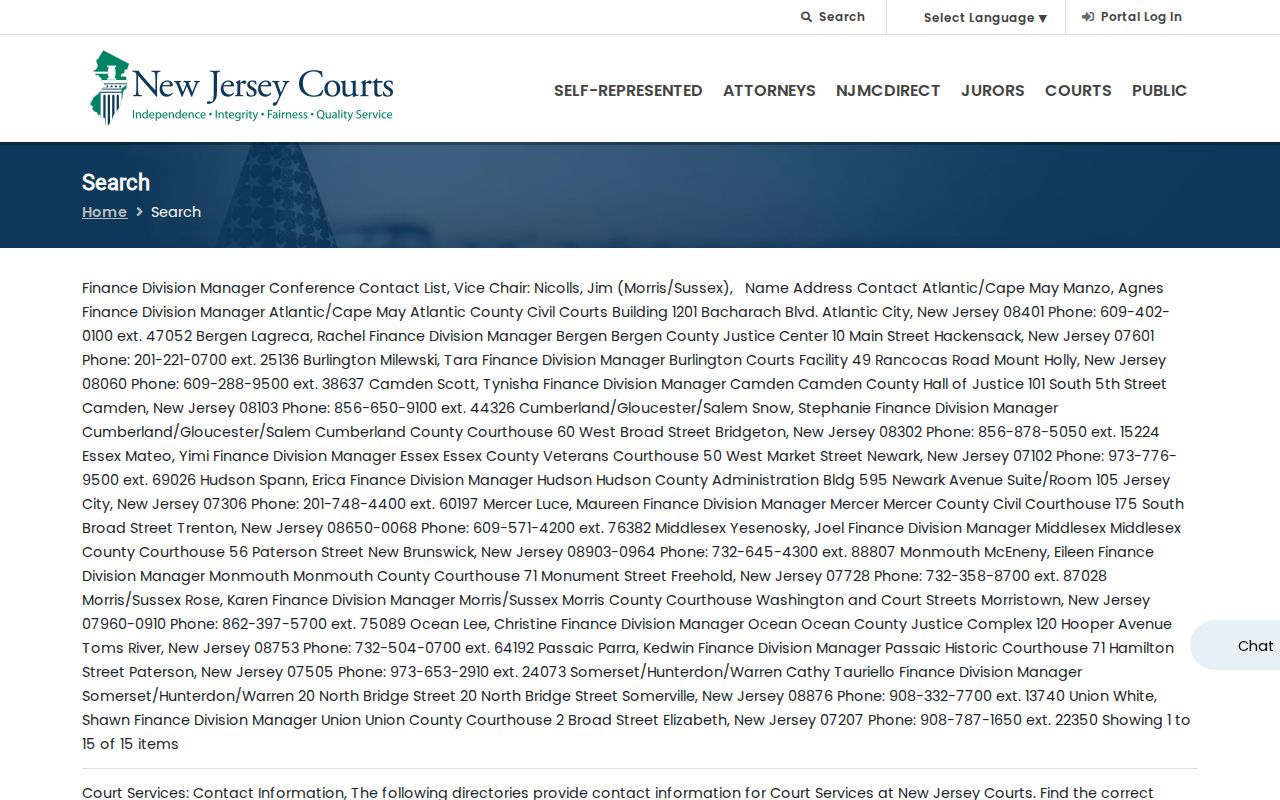
That menu helps select the correct court category. It does not replace reading the individual docket or requesting an unavailable public record through the Judiciary process.
Middlesex County Resident Voter Records
The state Voter Information Portal is a live status and polling-location route. Middlesex County’s Board of Elections keeps registration records and voter forms. The public status interface is narrower than a full voter-file request, and the research did not expose its current field labels in text capture. Use the Board for corrections, a specific records request, or an explanation of the current disclosure rules.
State law protects signatures, Social Security numbers, driver-license and non-driver identification numbers, and certain protected addresses. Voter information also cannot establish everyone at an address, because a registration may be inactive, recent, protected, or absent for lawful reasons. Ballot choices are not public. For an historical election question, request records by municipality, ward, election, and year rather than asking for a broad personal profile.
The official status portal is pictured here as a starting point for a narrow, date-sensitive voter question.
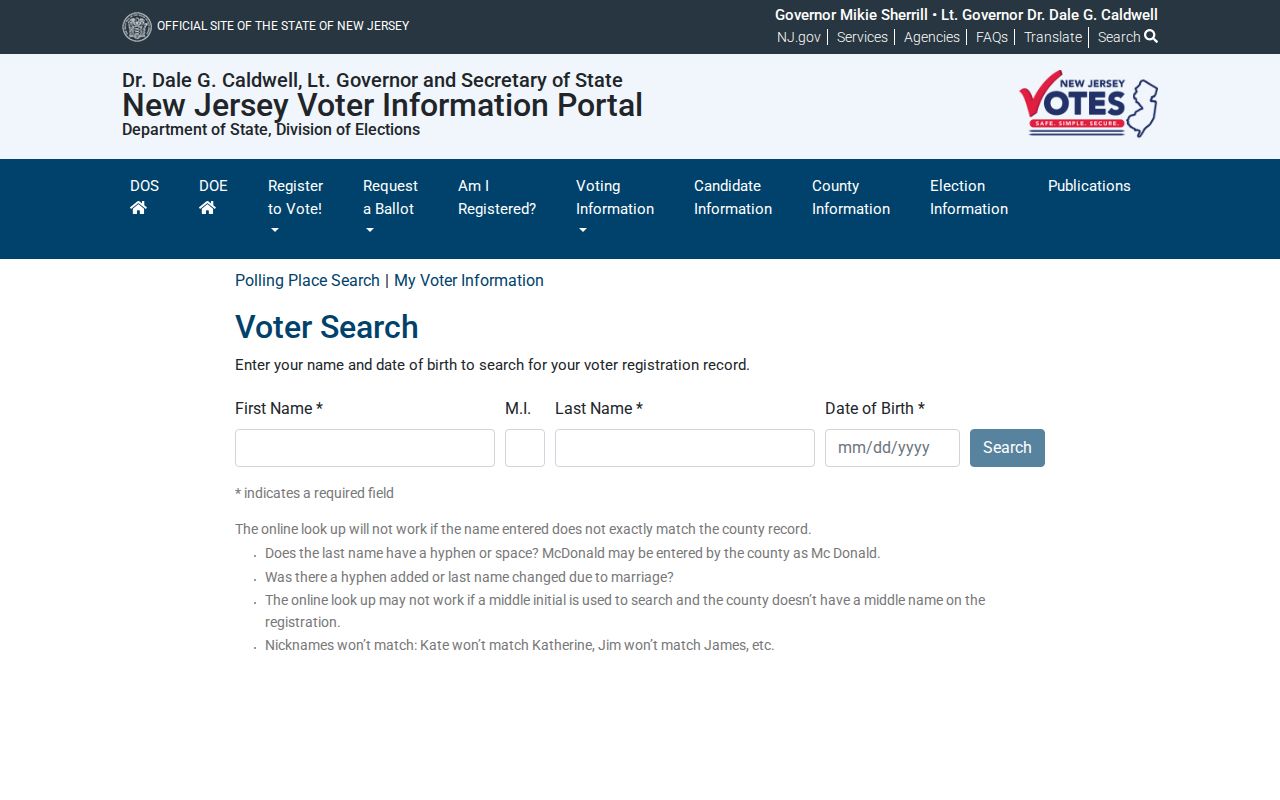
The portal supports current status checks. The county’s multilingual registration and voter forms are available through the Board’s official forms route for readers who need to update a record.
Note: A protected or inactive voter record should be treated as a privacy or maintenance issue, not as evidence that a person is absent from Middlesex County.
Middlesex County Resident Vital and Estate Records
Vital and estate records are often the right route for family history, an heir question, or a documented life event. For a Middlesex County event, a local registrar in the municipality of the event can issue local copies, while the New Jersey Office of Vital Statistics and Registry is the statewide route. New Jersey classifies births within 80 years, marriages within 50 years, deaths within 40 years, and all domestic partnerships and civil unions as non-genealogical current records. Eligibility, identity proof, and relationship rules apply to certified copies.
The Middlesex County Surrogate handles probate, wills, estates, guardianships, and related records. Its records department is at 75 Bayard Street and accepts appointment or mail research routes. The county lists a $10 estate search and $3 per page for copies. For older vital work, the State Archives, eligible genealogy application, newspapers, cemeteries, and repository collections may be better routes than a current-copy request.
The New Jersey vital-record ordering page shows the required application, identity, fee, and relationship checklist.
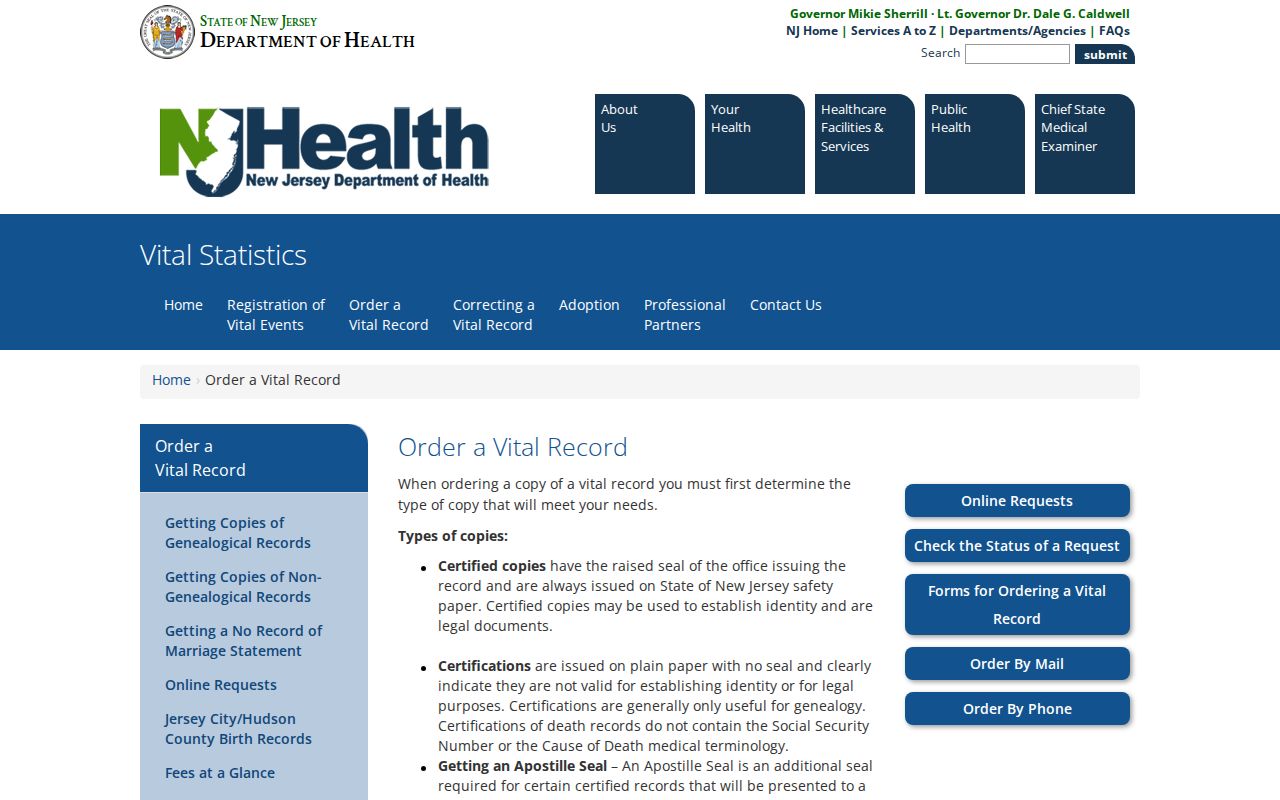
The checklist makes clear why a name alone is not enough for a current certified record. It also distinguishes a legal certified copy from an informational certification.
Middlesex County Resident Affiliation Records
A business filing, professional credential, or unclaimed-property result can supply a dated affiliation lead. The New Jersey Division of Revenue and Enterprise Services describes entity status, registered agent and address, officers or managers, annual reports, and UCC services. The County Clerk also keeps trade-name records. Those records can help distinguish a storefront, legal entity, or recorded proprietor from a private residence.
New Jersey’s MyLicense verification system can search a person or business by profession, license type, license status, first or middle name, last name, license number, and city. The system is real-time and does not provide telephone numbers for individual licensees. Keep the board, credential, result date, and exact name together. A credential proves a displayed licensing record, not a current home address or identity by itself.
The official license-search interface displays the fields used to narrow a verification.
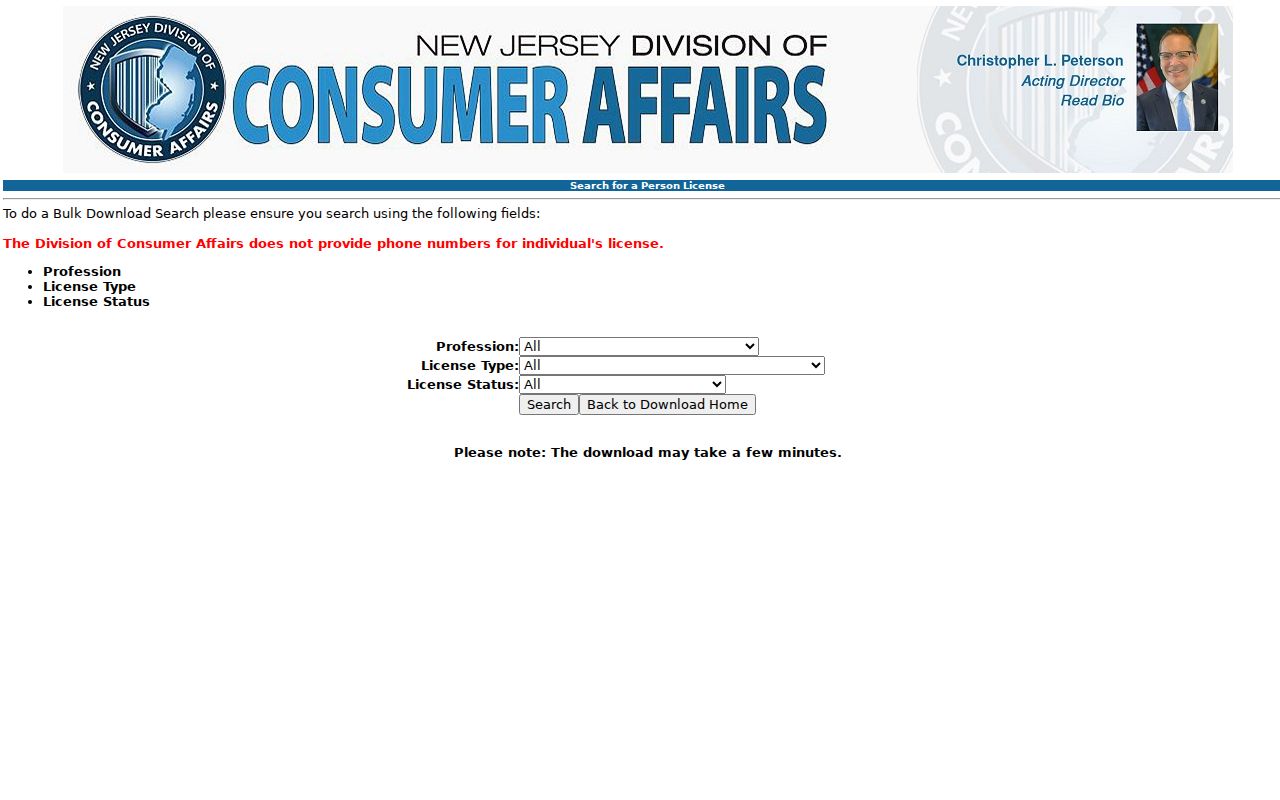
Use the license type and city as confirmation details, then verify a same-name result with another independent record if the question requires a reliable match.
Historical Middlesex County Resident Directories
Historical Middlesex County residents directory research is strongest around New Brunswick. Rutgers University Libraries reports roughly 800 New Jersey city-directory volumes, with especially complete New Brunswick coverage from 1855 onward. City directories are in the New Jersey Room’s closed stacks, so readers should request volumes by call slip and use the reference desk’s unpublished finding aid. County directories are on open shelves. An absent web result does not show that a physical volume is missing.
Directory entries may show a surname, given name, spouse or relationship, occupation, address, residence notation, business address, or a reverse street section. Read the abbreviation key in the same volume before expanding a shorthand. A good household trail compares two or more directory editions with a census year, obituary, newspaper image, deed, or probate record. For the collection details and the way entries read, use the Middlesex County City Directories.
Note: A historical directory is a periodic snapshot, so a listed address needs a date and an independent source before it supports a family-history conclusion.
Middlesex County Newspaper and Cemetery Trails
The digitized Middlesex newspaper portal makes it possible to search titles, years, and pages with all-words, exact-phrase, any-words, and exclusion modes. The captured holdings include Middlesex Mirror from 1951 through 1968, Middlesex Chronicle from 1964 through 1993, and The Chronicle from 1994 through 2007. Search names with initials, street names, neighboring towns, funeral homes, and varied spellings, then inspect the page image because OCR can misread both surnames and addresses.
The Genealogical Society of New Jersey’s Middlesex locator supplies a different historical layer: more than 280 burial places, nine maps, historical photographs, alternate cemetery names, and a full-name index. An obituary or cemetery entry can connect a dated address to relatives or a funeral location, but it remains a lead to confirm through a marker, original newspaper page, vital record, or Surrogate file.
Middlesex County Resident Privacy Boundaries
Middlesex County record access changes with the custodian and the person’s legal protections. The New Jersey Address Confidentiality Program may provide a substitute address for qualifying survivors. Daniel’s Law can require redaction of covered people and immediate household members. Voter rules also protect specified addresses and identifiers. Court, adoption, juvenile, expunged, and restricted materials have their own limits.
Use the Address Confidentiality Program or the Office of Information Privacy for a protected-address question. Do not ask a clerk to disclose the hidden location. For an apparent error, contact the source custodian: the assessor or Tax Board for assessment records, County Clerk for an index, Board of Elections or municipal clerk for voter information, court clerk for a docket, and the registrar or Department of Health for a vital record.
Middlesex County Property Alert Checks
Middlesex County’s 2022 Property Alert announcement describes a free service that can notify a subscriber when a matching recorded document is indexed for a legal description, municipality, block and lot, or party name. It is a notice after a matching document is recorded, not prevention. A subscriber should still open the document, compare the legal description, and contact the County Clerk when a recorded item looks wrong.
The county also published jury-duty and warrant-payment scam warnings in 2025 and 2026. Agencies do not demand payment or a Social Security number by phone. A public-record search can give a scammer a name or property fact, so navigate to the known county Property Alert notice or another official county and state page rather than trusting an unsolicited call. Middlesex County residents can keep a simple source log with the URL, access date, search terms, municipality, and record identifier.
That record-by-record discipline makes a directory search useful for family, property, heir, and civic questions without turning a dated public clue into an unsupported claim about a person.